The Society of the Cincinnati

The Society of the Cincinnati is the United States' oldest patriotic, hereditary, and veterans organization, founded on May 13, 1783, by officers of the Continental Army and Navy at the close of the American Revolutionary War. Chiefly envisioned by General Henry Knox, it was established to preserve the camaraderie of the officers, assist widows and orphans, and protect the newly won liberties of the Republic. George Washington served as its very first President General. .
The organization was named after Lucius Quinctius Cincinnatus, the legendary Roman general who famously relinquished absolute political and military power to return to his farm once the republic's crisis had passed—paralleling Washington's own actions. The city of Cincinnati, Ohio, was later named directly in honor of this society

Today, membership is still restricted. A person must trace their lineage back directly to a Continental Army or Navy officer who served for at least three years, died in service, or was serving at the war's conclusion. Exceptions are occasionally made for notable honorary members (such as former U.S. Presidents or Winston Churchill

The society is headquartered at the historic Larz Anderson House in Washington, D.C.. The property serves as a museum, historical research library, and event venue.

The American Revolution secured our national independence, established our republic, created our national identity, and articulated ideals of liberty, equality, and civic responsibility that continue to shape our nation and inspire the world. The Society of the Cincinnati was founded to perpetuate the memory and enduring principles of that vast event. To fulfill that historic responsibility, the Society created the American Revolution Institute of the Society of the Cincinnati.
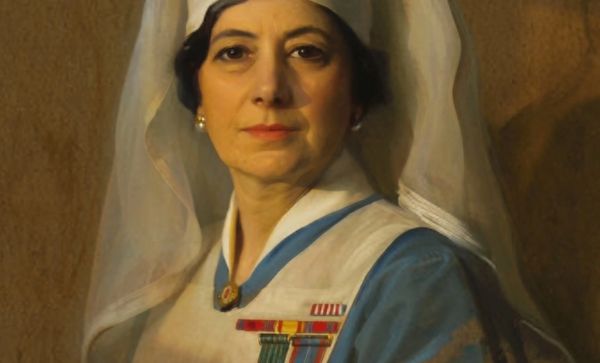
The Adventurous Life of Isabel
Anderson
Philanthropist. War nurse. Political commentator.
World traveler. Patriot. Author. Arts patron. Isabel Anderson filled her life-spanning the centennial of the American Revolution and World War Il-with pursuits that both fulfilled and challenged the expectations for a woman of her generation. She valued history and tradition, but refused to follow what she considered outdated customs. She embraced the duties of a society wife and hostess, but sought more meaning-

Since May 1784, delegates from the constituent branches have met “at least once in every three years” to conduct business and hold ceremonial events. These Triennial Meetings reflect the Society’s challenges and successes over the centuries, as well as its leaders’ remarkable continuity of purpose
Basilica of St. Edward Palm Beach

The Vatican officially designated the parish as a minor basilica. It is the first and only basilica in the Diocese of Palm Beach, making it one of only a handful in the state of Florida. As part of this rare elevation, Bishop Gerald M. Barbarito blessed the church’s northern double doors as official Holy Doors.